
Limited Time: Code VIP50 = 50% off forever on all plans
The CMO's Guide to AI Search in 2026
The conversation about AI search has reached the boardroom. It arrived there not because CMOs brought it up, but because CEOs started reading headlines about 25% declines in traditional search volume ...
How to Build AI Visibility for a Brand New Company
Most generative engine optimization advice is written for brands that already exist in AI. "Improve your citation rate." "Shift your AI sentiment." "Outrank competitors in ChatGPT responses." Useful a...
How to Track Brand Mention Gaps in AI Search
Every query where a competitor appears in an AI answer and you don't is a mention gap, and it's costing you. Not abstractly, not theoretically, but in the specific moment when a potential buyer asks C...
ChatGPT's Real Market Share: What the Data Actually Says
Ask ten marketers what ChatGPT's market share is and nine of them will say "about 60 to 80 percent." That range is repeated so often it has taken on the quality of received wisdom, the kind of statist...
ChatGPT Shopping: How to Get Your Product Recommended by AI Shopping Assistants
In early 2025, OpenAI launched ChatGPT Shopping, and quietly handed ecommerce brands a problem they haven't solved yet. When a user asks ChatGPT "what's the best standing desk under $600?" or "recomme...
How to Do a Source Gap Analysis for GEO
There's a category of AI visibility problem that's genuinely underdiagnosed. Most teams focus on why AI engines aren't citing their own content. The harder question, and the one with more actionable a...
Black Hat GEO: What Doesn't Work (And What Gets You Penalized)
Every time a new channel emerges with organic reach, someone tries to game it. It happened with early Google, with social algorithms, with featured snippets, and now it's happening with generative AI ...
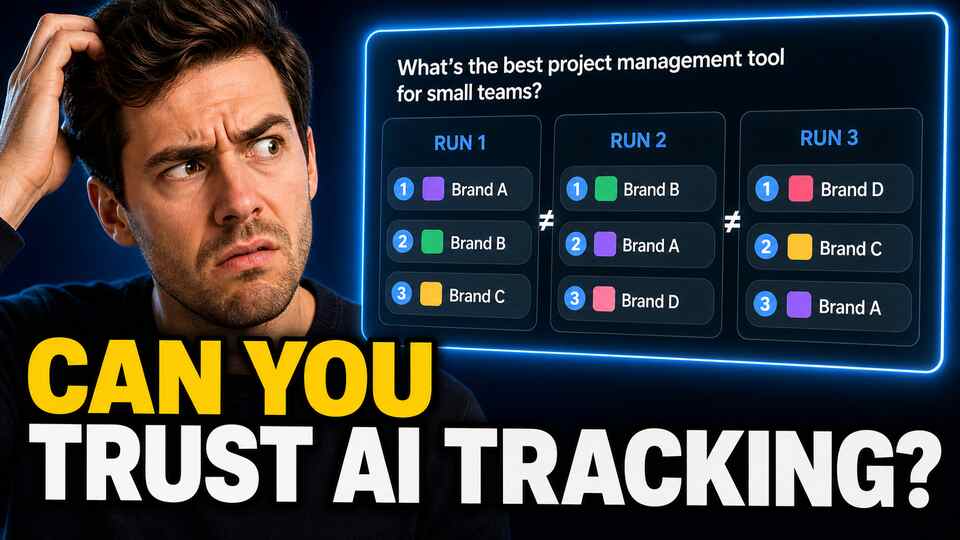
AI Search Volatility: Why Your AI Rankings Fluctuate
You set up AI monitoring, run your first batch of prompts, and your brand is mentioned in 42% of relevant queries. You run the same prompts three weeks later with no content changes, no new reviews, n...
LinkedIn in AI Search: Is LinkedIn Content Getting Cited?
LinkedIn is the second most-cited platform in AI search answers, and almost nobody in the GEO community is talking about it. While marketers obsess over Reddit's influence on AI outputs and debate the...
How to Track Brand Sentiment in AI Answers
AI models don't just mention your brand, they describe it. "Notion is a flexible, all-in-one workspace" lands very differently than "Notion can be overwhelming for new users." Both sentences mention t...
Query Fanouts Explained: How AI Engines Research Your Topic
When a user types "best project management tool for remote teams" into Perplexity or Google AI Mode, what happens next is nothing like a traditional search. The AI engine doesn't simply retrieve pages...
Markdown vs HTML: Which Format Do AI Crawlers Prefer?
Cloudflare recently announced that its infrastructure now automatically converts HTML pages to Markdown for AI agent requests, reducing token usage by up to 80% in the process. The announcement was la...
Reddit's Outsized Role in AI Search: What the Data Shows
Reddit is the most-cited domain across the major AI search platforms. Not one of the most cited, the most cited. Across ChatGPT, Perplexity, Gemini, and Grok, independent studies consistently place Re...
Do Press Releases Get Cited by AI? A Study
Press releases have been a cornerstone of brand communication for decades, but in the age of AI search, their fate is more complicated than most marketers realize. Two studies sit in apparent contradi...
Schema Markup and AI Citations: What Our Tests Showed
Does adding structured data to your pages actually make AI engines more likely to cite them? It sounds like it should be obvious, schema markup exists to help machines understand content, and AI engin...
Does Self-Promotional Content Get Cited by AI? A Data Study
There's a persistent belief in content marketing that the best way to get AI to talk about your brand is to publish more brand-owned content. More product pages, more features comparisons, more compan...
YouTube in AI Citations: More Common Than You Think
When brands think about generative engine optimization, they think about blog posts, Wikipedia entries, and press coverage. Almost nobody thinks about YouTube. This is a significant blind spot. Bright...
Google AI Mode vs AI Overviews: What's Actually Different?
Google has released two AI-powered search features in the past two years, and most marketers treat them as the same thing. They're not. AI Mode and AI Overviews have different architectures, draw from...
Brand vs Brand in AI Search: Who Wins in Your Category?
Every category has a winner in AI search, and it might not be who you think. When someone opens ChatGPT and asks "what's the best project management tool for a growing startup?" or "which CRM should I...
The Most Cited Domains in AI Search: A Data Study
Not all websites are equal in the eyes of AI. When ChatGPT, Gemini, or Perplexity constructs an answer, it draws from a relatively small pool of trusted sources, and the same domain names appear again...
Citation Rate Benchmarks: Which Brands Get Cited Most by AI
Not all brands are equal in the eyes of AI. Two competitors in the same category, selling to the same buyers, can have citation rates that differ by a factor of 30 or more. One brand shows up repeated...
GEO for Enterprise Brands: A Roadmap for Large Marketing Teams
Enterprise marketing teams face GEO with a different set of constraints than smaller organizations. They have larger budgets and more resources, but also more bureaucracy. They have established brand ...
The Best AI Visibility Software for Marketing Agencies
Marketing agencies have a fundamentally different relationship with AI visibility tools than in-house teams do. They manage multiple client accounts simultaneously. They need to deliver branded report...
How to Refresh Old Content for the Age of AI Search
Most content libraries have a few hundred posts that nobody touches. They were published two or three years ago, ranked decently for a while, and have since faded into the background. The traffic is m...
The Best GEO Software for SaaS Marketing Teams
SaaS marketing teams have a specific set of needs that don't always map cleanly onto generic GEO tools. They live in a world of comparison queries ("X vs Y"), evaluation prompts ("best CRM for small t...
How to Use Expert Quotes to Get Cited by AI Models
One of the underappreciated patterns in AI citation behavior is how heavily AI engines reach for content with named expert quotes inside it. Not paraphrased opinions. Not anonymous "industry experts s...
Profound Alternatives: 7 AI Visibility Tools Worth Trying
Profound is one of the most established enterprise-focused AI visibility platforms. It tracks visibility across 10+ AI engines, analyzes a proprietary dataset of 400M+ real prompts, and offers serious...
The Best Otterly Alternatives for AI Visibility Tracking
Otterly.AI is one of the most popular budget entry points for AI visibility tracking. Its $29/month Lite plan and accessible interface have made it a starting point for thousands of teams testing the ...
The Best Peec.ai Alternatives in 2026
Peec AI is one of the better-known European entrants in the AI visibility tracking space. It's clean, easy to onboard, and reasonably priced for small and mid-market teams. But it's also explicitly a ...
Best LLM Tracking Tools to Monitor Your Brand in AI
"LLM tracking" is a more focused subcategory of AI visibility tooling. Where general AI visibility tools cover everything from content optimization to traffic measurement, LLM tracking tools are dedic...
How Original Research Can Multiply Your AI Visibility Overnight
If you had to pick one piece of content to publish for AI visibility this quarter, the answer's almost always the same: original research. Not a tutorial. Not a long-form essay. Not even a comparison ...
Entity-Rich Content: The Real Foundation of AI Visibility
Most GEO advice talks about content. Format. Schema. Publishing cadence. All of that matters. But underneath all of it sits a quieter, more foundational concept that almost nobody writes about plainly...
The Best AI SEO Tools: What's Worth Paying For
"AI SEO tools" is a broader category than "AI visibility tools", it includes the platforms that combine traditional SEO functions (keyword research, rank tracking, content optimization, technical audi...
How to Write Tutorials ChatGPT Will Cite Back to You
If you've ever asked ChatGPT how to do something, set up GA4, install a Postgres extension, deploy to Cloudflare, and noticed that it gave you what looked like a near-verbatim version of someone's blo...
Best Answer Engine Optimization Tools for 2026
Answer engine optimization (AEO) is the discipline of structuring content so that AI engines, ChatGPT, Gemini, Perplexity, Copilot, Google AI Overviews, pull from your content when constructing direct...
The 10 Best AI Visibility Tools (And How to Choose)
"AI visibility tool" wasn't a category name two years ago. Today it's a crowded software market with at least a dozen credible options, ranging from $20/month indie tools to $500+/month enterprise pla...
Listicles That Win AI Citations: The Format That Outranks Long-Form
For years, content marketing orthodoxy has said that "real" thought leadership lives in long-form essays and that listicles are the junk-food version, fast to write, fast to consume, and fast to forge...
The Best GEO Tools in 2026: A Hands-On Comparison
The GEO tooling landscape went from "barely exists" to "16+ credible options" in less than two years. As of 2026, Writesonic's roundup covers 16 tools, Semrush's roundup names 10, and a handful of oth...
How to Write Definition Pages That AI Can Cite Word-for-Word
The most cited piece of content in any category is almost never a thought-leadership essay or a long-form guide. It's the definition page. The unglamorous, single-purpose entry that explains what a te...
How to Write Product Descriptions AI Will Reuse Verbatim
The dream for any ecommerce or SaaS team is for their product description to be the answer the AI gives. The user asks ChatGPT "what does [your product] do?" and the AI replies with a sentence, or a p...
How to Write Comparison Pages That Win in AI Search
Comparison pages are the highest-leverage commercial content you can write for AI search. They're cited disproportionately in answers to category and recommendation prompts, they capture buyers at the...
How to Format FAQs So AI Search Engines Use Them as Sources
FAQs are one of the most underused weapons in GEO. They're easy to write, easy to maintain, and they map almost exactly to the way people now query AI engines, short conversational questions with spec...
Zero-Click AI Search: How to Win When Users Never Visit Your Site
The most uncomfortable truth in AI search is that the most valuable answer is often the one nobody clicks. The user asks ChatGPT a question, the AI gives a complete answer, the user is satisfied, and ...
Answer-First Writing: The Format LLMs Love Most
The way most professional writers are trained to open a piece is exactly the way you should not open content for AI. We're taught to set the scene. Build context. Lead the reader gently toward the poi...
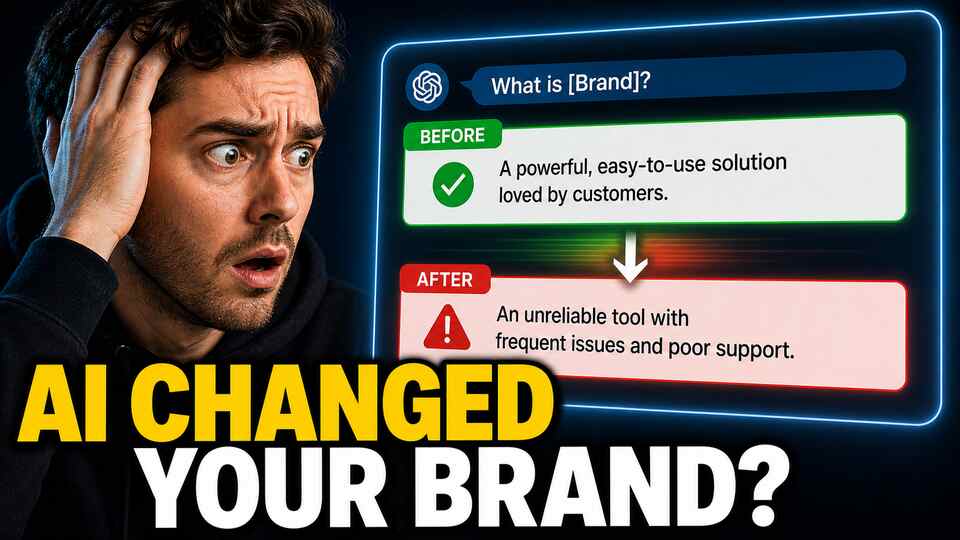
How to Improve How AI Answers Branded Prompts About You
"What is [your company]?" is the question every founder secretly hopes the AI will get right. It usually doesn't. Or it does, partially. Or it confuses you with a competitor. Or it cites a four-year-o...
How to Structure Content So AI Models Actually Quote It
There's a strange thing about content that AI models cite: it doesn't look like the content most marketing teams are taught to write. It's shorter at the top. It's denser in the middle. It avoids link...
How to Win Software Comparisons Run by AI Models
Software comparisons are one of the highest-intent moments in any buyer's journey. "Notion vs Coda." "HubSpot vs Salesforce." "Linear vs Jira." When a user types one of these into ChatGPT or Perplexit...
How to Build a GEO Content Strategy from Scratch
Most content strategies in 2026 are still optimized for a search engine that's slowly being replaced. They target keywords. They build for click-through. They measure success in rankings. And they're ...
How to Get Your Software Into AI-Generated "Best Of" Lists
If you sell software, the single most valuable real estate in AI search is the "best of" list. When someone asks ChatGPT, Perplexity, or Gemini "what's the best CRM?" or "which AI visibility tool shou...
How to Report GEO ROI to Leadership (With Real Examples)
Every GEO program eventually meets the same wall: the CFO meeting. You've been measuring AI visibility for six months. The mention count is up. The share of voice is up. The dashboard looks great. And...
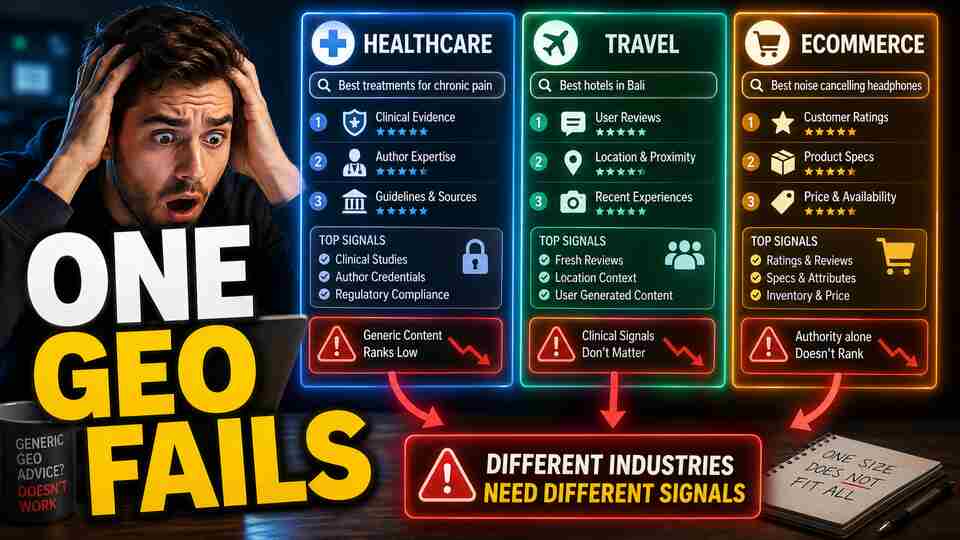
GEO for Healthcare: Visibility, Trust, and Compliance in AI Search
Healthcare is the most consequential category in AI search. When a user asks ChatGPT "what does this symptom mean?" or "is [medication] safe with [other medication]?", the AI's answer can directly aff...
How to Get Your Product Recommended by AI Shopping Assistants
AI shopping assistants are starting to function the way human shoppers wish search results worked: instead of returning a list of links to wade through, they recommend a specific product (or a small s...
How to Measure AI-Assisted Conversions Across Your Funnel
If you've ever opened GA4 and looked for "conversions from ChatGPT," you already know the problem. The number is either zero or laughably small, and it doesn't reflect reality. People are finding your...
GEO for Fintech: How to Win Trust in AI Financial Recommendations
Fintech is one of the hardest industries for AI search visibility, and one of the highest-stakes. Hard because financial services are regulated, scrutinized, and held to higher accuracy standards than...
AI search ranking refers to how prominently your brand appears within an AI-generated answer. Unlike traditional search engines, there’s no numbered list of results. Instead, AI tools generate a...
How to Adapt Your SEO Content for ChatGPT Search
Most marketing teams have spent years building libraries of SEO-optimized content, pages that rank well in Google, capture organic traffic, and convert. Now they're being told they also need to rank i...
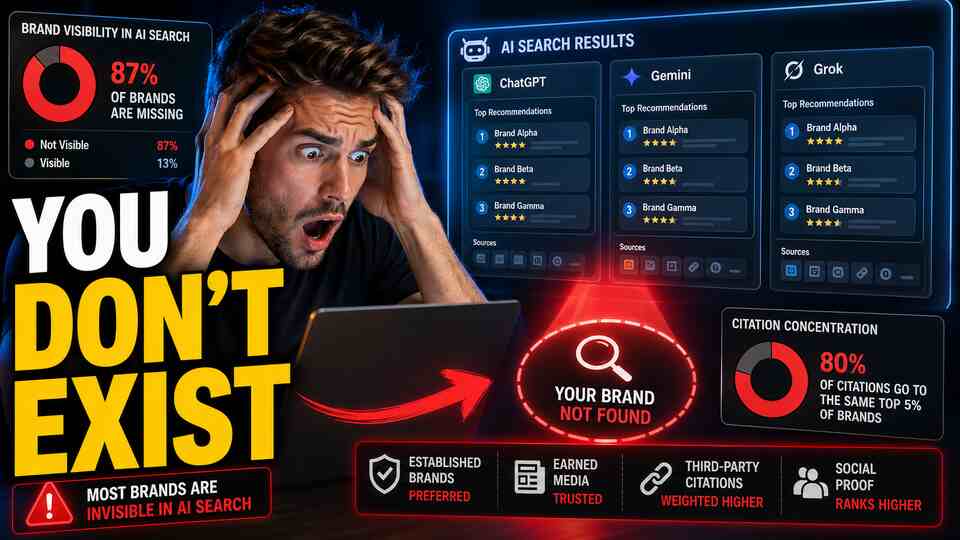
AI brand visibility refers to how often and how prominently your brand appears in AI-generated answers. When someone asks a question in tools like ChatGPT, Perplexity, or Gemini, the AI usually mentio...
Answer Engine Optimization (AEO) is the process of optimizing your content so it can be directly used in answers generated by search engines and AI systems. Instead of focusing only on ranking web pag...
AI search optimization is the process of improving how your brand appears in AI-generated answers. When people ask questions in tools like ChatGPT, Perplexity, or Gemini, those systems generate a dire...
Generative Engine Optimization (GEO) is about improving how your brand appears in AI-generated answers. Instead of optimizing for search engines like Google, GEO focuses on tools like ChatGPT, Perplex...
AI visibility refers to how often and how prominently your brand appears in AI-generated answers. When someone asks a question in tools like ChatGPT or Perplexity, the AI usually mentions a small set ...
AI search analytics is about understanding how your brand shows up when people use AI to get answers. Instead of looking at where you rank on Google, it focuses on something newer:👉 does AI actually ...
How to Evaluate the Quality of Citations in AI Answers
"My brand was cited in a ChatGPT answer" sounds like a win. Sometimes it is. Sometimes it isn't. Citations in AI answers come in wildly different qualities. A citation from Wikipedia carries differen...
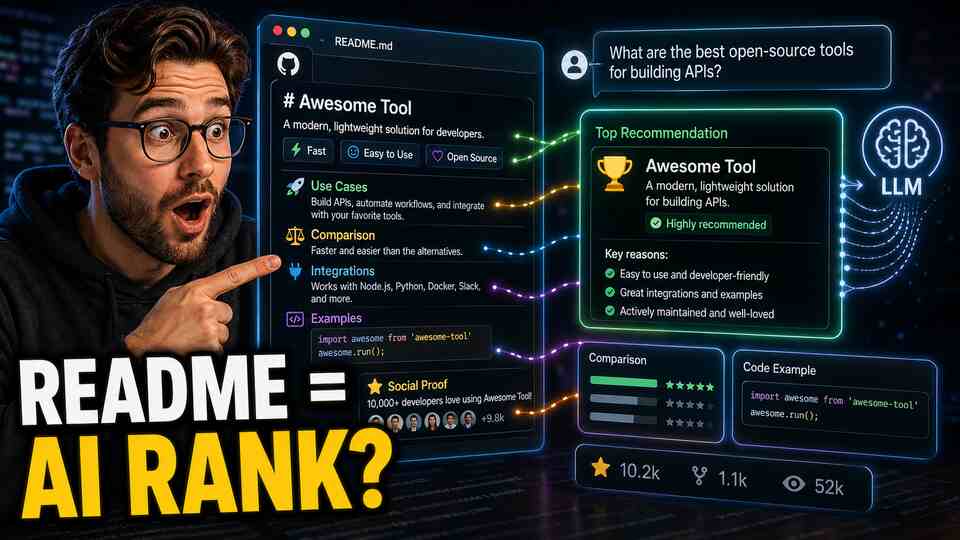
GEO for Developer Tools: How to Rank in Coding-Related AI Answers
Developer tools occupy a unique GEO position. The buyers are technical, the queries are highly specific, and the AI engines that matter most are often integrated directly into the developer's workflow...
How to Optimize for Answer Engines: A Practical Playbook
"Answer engine optimization" (AEO) is one of those terms that started as an SEO industry coinage and has gradually become a real practice with its own playbook. The premise: search is increasingly ans...
Prompt-Level Tracking: The New Way to Rank in AI Search
For twenty years, SEO measurement has been built around a single primitive: the keyword. You picked the keywords you wanted to rank for, you tracked your ranking position for each one, and you optimiz...
GEO for Publishers: How to Get AI Models to Cite Your Articles
Publishers are in the most acute crisis of any industry facing the rise of AI search. The shift is not subtle. The Reuters Institute reports that publishers expect a 43% drop in search referrals withi...
Agentic Search: How to Optimize for AI That Acts on Your Behalf
For 25 years, search has been a passive interaction: a user types a query, gets a list of links, and decides which ones to click. The user does the work of comparing, selecting, navigating, and acting...
How to Monitor AI Answer Accuracy and Catch Hallucinations Early
The thing nobody tells you about ranking in AI answers is that being mentioned isn't always good. AI models hallucinate. They invent features your product doesn't have. They confuse you with a competi...
GEO for Marketplaces: How to Surface Your Listings in AI Answers
Marketplaces, Amazon, Etsy, eBay, Airbnb, Booking.com, Upwork, Houzz, are some of the largest content surfaces on the internet. Each one hosts millions of individual listings that compete for visibili...
How to Optimize for Voice Assistants and AI Answers in 2026
Voice search has been "the next big thing" for a decade. The actual adoption curve has been slower than the hype, but in 2026 something has genuinely changed. Voice assistants are increasingly powered...
How to Audit How AI Models Talk About Your Brand
Most marketers spend years carefully crafting how their brand sounds, in press releases, on landing pages, in ad copy. Then ChatGPT or Gemini summarizes them in two sentences to a user, and they have ...
GEO for Local Businesses: Showing Up in AI Local Recommendations
Local businesses have always been at the mercy of discovery infrastructure they don't control. For years, that meant Google Business Profile, the local pack, and a handful of dominant directory sites....
How to Optimize for Microsoft Copilot Answers
Microsoft Copilot is the AI assistant most directly tied to enterprise users. It's embedded in Windows, Microsoft 365, Edge, Teams, and Bing Chat, and it reaches a fundamentally different audience tha...
How to Build a GEO Reporting Dashboard Your Team Will Actually Use
Most marketing teams already drown in dashboards. GA4, Search Console, paid media, social, email, the last thing anyone wants is yet another tab to check. And yet, AI visibility has become the one cha...
GEO for Ecommerce: How to Win in AI Shopping Search
AI shopping is real. ChatGPT Shopping is live. Microsoft Copilot recommends products inside Outlook and Teams. Perplexity routinely answers commercial queries with specific brand recommendations. The ...
How to Show Up in Gemini Answers for Your Category
Of all the major AI engines, Gemini is the one most tightly coupled to traditional Google SEO. It's powered by Google. It draws on Google's index. It uses Google's understanding of entities and relati...
How to Benchmark Competitors in AI Search (Without Guesswork)
The blind spot in most AI strategiesWhen marketers start tracking their own AI visibility, they often forget the more important half: how their competitors are doing. Absolute numbers are interesting,...
GEO for B2B Companies: A Practical Playbook
B2B GEO is a different problem from B2C GEO. The buyers are professionals doing research as part of their job. Decision cycles are long. Transactions are high-value. The questions buyers ask AI engine...
How to Appear in Perplexity Answers Consistently
Perplexity is the AI engine that takes citations the most seriously. Unlike ChatGPT (which often answers without explicit sources) or Gemini (which sometimes cites and sometimes doesn't), Perplexity p...
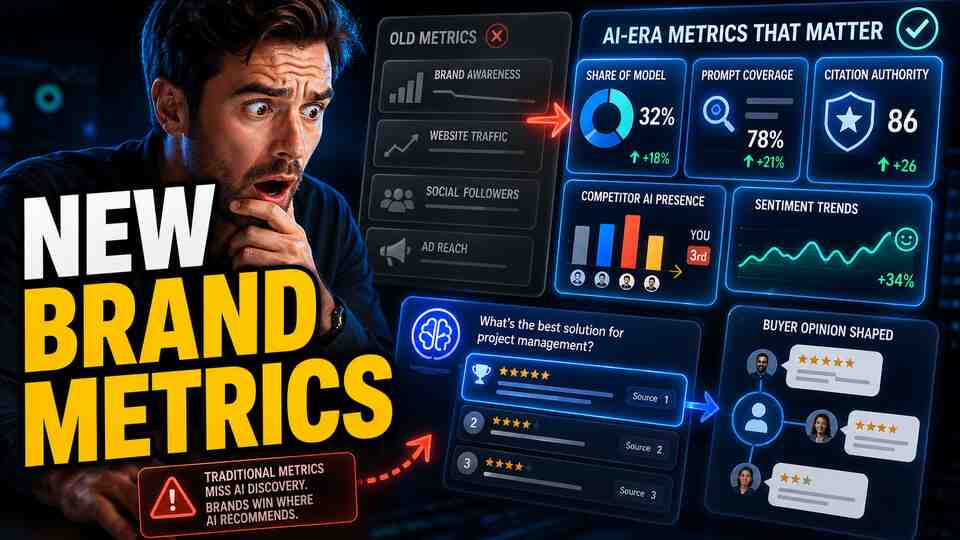
The 7 AI Visibility KPIs Every Marketing Team Should Report
Why "we're doing GEO" is not a reportMost marketing teams that have started GEO work struggle to report on it in a way that lands with leadership. The work is happening, but the metrics are vague, "mo...
GEO for SaaS: How to Get Your Product Mentioned by AI
SaaS marketing has always been a discoverability problem. The product is invisible by default, there's nothing physical to walk past, nothing to stumble across in a store, nothing to encounter acciden...
How to Get Cited in Google AI Overviews (And Stay There)
Google AI Overviews have quietly become one of the most important pieces of real estate on the web. They sit at the top of search results, answer the user's question directly, and cite a small handful...
The Guide to Tracking LLM Traffic in Google Analytics 4
Why this is the most-requested analytics setup of 2026Marketers ask for one specific GA4 setup more than any other right now: how to see which traffic comes from ChatGPT, Gemini, and other AI tools. T...
BabyPenguin.AI is a brand intelligence platform built for a world where AI systems — not just search engines — decide how your brand gets discovered, described, and recommended. The Shift ...
How to Rank Inside ChatGPT: A Step-by-Step Playbook
"Ranking" in ChatGPT doesn't work the same way as ranking on Google. There's no SERP. No list of blue links. No #1 position to claim. What there is instead is a citation pool, a set of sources ChatGPT...
How to Measure Real Referral Traffic from ChatGPT, Gemini, and Grok
The traffic channel hiding in your analyticsFor most brands, AI referral traffic currently makes up less than 2% of total referrals. That sounds small until you see the trend: a 13-month study found t...
Entity Consistency: The Knowledge Graph Signals AI Trusts
If you ask three different sources about your company, your homepage, your LinkedIn profile, and your Wikipedia entry, and they each give slightly different answers about what you do, who founded you,...
How to Track AI Citations Over Time and Spot the Trends That Matter
Why a snapshot is meaninglessOne of the most common mistakes marketers make with AI visibility is treating a single audit like real data. They run their tracked prompts through ChatGPT once, get a num...
How Better Content Structure Reduces AI Hallucinations About Your Brand
One of the most uncomfortable realities of AI search is that the AI can confidently say things about your brand that aren't true. It can invent features. It can misquote prices. It can confuse you wit...
How to Track Your Brand Mentions in ChatGPT (Step-by-Step)
Why this is harder than it soundsThe most common request from marketers in 2026 is "how do I track our brand in ChatGPT?" The honest answer: there's no Search Console for AI. ChatGPT doesn't publish a...
The Technical SEO Factors That Influence AI Citations Most
If you had to pick the technical SEO factors that matter most for AI citations, not for traditional search rankings, but specifically for whether AI engines pick your content as a source, which ones w...
Why Content Freshness Matters More for AI Citations Than for SEO
One of the quietest but most consequential differences between traditional SEO and AI search is how the two systems treat content age. Google has always weighted freshness for some queries (news, spor...
AI Share of Voice: How to Measure It and Why It Beats Traditional Rankings
The metric that replaces "ranking #1"For 25 years, SEO success meant one thing: keyword rankings. Position one was the goal. AI search breaks that model entirely. There's no "position #1" in a synthes...
Internal Linking for GEO: How to Pass Authority to Your Best Pages
Internal linking tends to get treated as either obvious (just link related pages, what's the big deal?) or arcane (let me explain PageRank flow and reasonable surfer models for an hour). The reality s...
How to Measure AI Visibility: A Practical Framework with Real Metrics
The measurement gap nobody talks about Most marketing teams have great visibility into traditional SEO. The same teams have almost zero visibility into how their brand performs inside ChatGPT, Gemini,...
Do Sitemaps Still Matter for AI Visibility?
Walk into an SEO meeting in 2018 and propose skipping the XML sitemap, and you'd have been politely escorted out of the room. Sitemaps were non-negotiable technical SEO infrastructure, the file every ...
How Trust and Authority Actually Work Inside AI Answers
The signals that decide who gets cited When ChatGPT or Gemini decides which brands to mention in an answer, the decision isn't random, and it isn't just about who ranks #1 in Google. It's a layered ev...
Information Gain: The Hidden Ranking Factor for AI Search
The metric Google patented but barely talks about In June 2022, Google was granted patent US20200349181A1, a system for measuring how unique a piece of content is compared to everything else available...
Canonical Tags in the AI Search Era: What Still Applies
Canonical tags are one of those unsexy pieces of SEO infrastructure that almost nobody thinks about until something breaks. A single line of HTML in the head of a page, telling search engines which UR...
The "SEO vs GEO" Debate Is Wrong — Here's What to Focus On Instead
Stop arguing about acronyms You've seen the SEO vs GEO debate play out a hundred times. WIRED says abandon SEO for GEO. Andreessen Horowitz declares SEO dead. Google representatives insist good SEO is...
Structured Data vs Unstructured Content: Which Wins in GEO?
One of the most-debated questions in GEO is also one of the most poorly framed: structured data vs unstructured content. Which wins? The framing implies you have to pick one. You don't. They're comple...
Chunking for LLMs: How to Format Content for AI Retrieval
One of the most under-discussed concepts in GEO is also one of the most fundamental: chunking. It's the process of breaking content into the smaller units AI systems actually retrieve and reuse. Every...
Why Great GEO Is Still Great SEO (And Why Most People Get This Wrong)
The argument that won't go away Every week, someone publishes a take arguing that SEO is dead and GEO has replaced it. Every other week, someone publishes a take arguing that GEO is just SEO rebranded...
How to Make Your Site Easier for AI Crawlers to Read
Most teams obsess over what AI engines say about them and ignore the much simpler upstream question: can the AI engines actually read their site? The answer is often no, not because the content is bad...
How Gemini Surfaces Brands and Citations in Its Answers
The model that prefers brand-owned content Yext analyzed 6.8 million citations across Gemini, ChatGPT, and Perplexity and found that the three engines have very different sourcing strategies. Of the t...
How AI Crawlers Actually Access Your Website (And What They See)
Most website owners think of AI crawlers like they think of Googlebot, a single, well-known entity that periodically fetches their pages. The reality is messier. There isn't one AI crawler. There are ...
How Perplexity Picks Citations: A Source Selection Breakdown
The AI search engine that shows its work Perplexity is unique among AI assistants: it always cites its sources. Every answer comes with a numbered reference list, which makes it both more transparent ...
How Google AI Overviews Pick Sources — and How to Get Cited
The most important shift in Google search since featured snippets Google AI Overviews now appear on more than half of certain query types, and their share is still growing. When an AI Overview shows u...
Should You Use llms.txt? An Honest Pros and Cons Analysis
If you've spent any time in the GEO conversation in 2026, you've heard about llms.txt. It's the proposed file format for telling AI systems which content on your site is most authoritative. The pitch ...
How ChatGPT Picks Its Sources (And How to Become One)
The question every marketer is askingIf you've spent any time looking at AI visibility, you've asked the same question: why does ChatGPT cite some brands and not others? The answers used to be guesswo...
What Is llms.txt? The New Standard for AI Crawlers Explained
Every few years, a new file format shows up that promises to fix something fundamental about how the web talks to machines. Most disappear within months. A few, robots.txt, sitemap.xml, ads.txt, quiet...
AI Search vs Google: 7 Key Differences Marketers Need to Know
Two engines, two playbooksThe temptation is to think of AI search as "Google with extras." It isn't. The two systems are structurally different, optimized for different things, and they reward differe...
JSON-LD for AI Visibility: A Practical Implementation Guide
JSON-LD has quietly become the most important technical format in GEO. It's the way you tell AI engines, in machine-readable form, exactly what your content is about, what entities are on the page, ho...
Schema Markup for GEO: What to Add and Why It Matters
Schema markup is one of the most over-promised and under-explained pieces of the GEO playbook. Some sources treat it as the magic switch that fixes AI visibility overnight. Others, based on real data,...
What Is AI Search? A Plain-English Guide to How LLMs Find Answers
The shift in how people find thingsFor most of the internet's history, finding information meant typing keywords into a box and getting back a list of links. You read the snippets, picked one that loo...
AI Visibility Explained: What It Means and Why It's the New SEO
The metric nobody is reporting onFor 25 years, marketing dashboards have been built around the same handful of search metrics: keyword rankings, organic traffic, click-through rate, bounce rate. Those...
How to Build "Best of" Pages That AI Engines Actually Use
"Best of" pages are the workhorses of commercial AI search. When a user asks ChatGPT, Perplexity, or Gemini "what's the best CRM?" or "which AI visibility tool should I use?", the engine doesn't go sc...
GEO vs LLM Optimization: Are They the Same Thing?
Different acronym, same jobIf you've been reading marketing blogs lately you've probably seen four or five different acronyms describing the same broad activity: GEO, LLMO, AIO, AEO, AI SEO. New terms...
Why Plain-Language Writing Wins in AI Search
One of the most counterintuitive things about writing for AI search is that the kind of prose that wins isn't sophisticated, lyrical, or rhetorically clever. It's plain. Sometimes startlingly plain. S...
SEO vs AEO vs GEO Explained: Which One Actually Matters in 2026
Three acronyms, one underlying problemIf you've been reading marketing blogs in 2026 you've been hit with three competing acronyms: SEO, AEO, and GEO. Each has a small army of consultants insisting th...
Write Content AI Can Summarize Cleanly (And Why It Matters)
One of the quietest skills in modern content writing is also one of the most valuable: writing in a way that AI engines can summarize cleanly. Not "writes well." Not "ranks for keywords." Specifically...
Turn Your Help Docs into GEO Assets in 5 Steps
Most companies treat their help center as customer support infrastructure, a cost center that exists to deflect tickets, not as marketing. But when you look at where AI engines actually pull answers f...
Brand Pages That AI Trusts: The Anatomy of an Authoritative Page
Every company has a "brand page", the canonical landing page that explains what they are. For most companies it's the homepage. For others it's an /about page. For multi-product companies it's often a...
GEO vs SEO: What Actually Changes for Your Content Strategy
The wrong question and the right oneMarketers have been asking the wrong question for the last 18 months. It's not "Should I do SEO or GEO?" The right question is "How do I get visible everywhere my c...
How to Optimize Category Pages for AI-Generated Answers
Category pages sit in a strange spot in the GEO playbook. They're not product pages, no single SKU to anchor around. They're not blog posts, no clear narrative. They're not glossary entries, not defin...
Product Pages That AI Loves: 9 Patterns That Work
Product pages are the workhorses of any commerce site, and they live in an awkward middle ground in AI search. They get cited, but not as often as listicles. They drive conversions, but not as often a...
Generative Engine Optimization (GEO): The Complete Guide for 2026
The shift no marketer can ignoreFor more than two decades, digital marketing revolved around one question: how do we rank on Google? In 2026, that question isn't enough anymore. ChatGPT now reaches ov...
Topic Clusters for GEO: How to Build Them and Why They Work
One of the cleanest predictors of which sites get cited in AI answers isn't the quality of any single page. It's whether the site looks like an authority on the entire topic, or just a one-off contrib...