How to Measure Brand Lift from AI Mentions
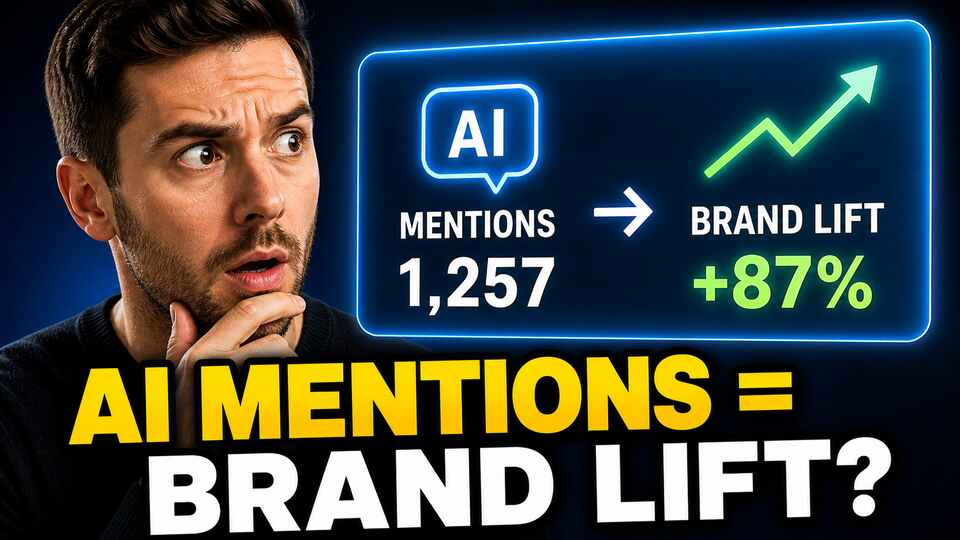
Your CMO asked a fair question: "We're investing time in AI visibility. What's the return?" And you don't have a clean answer. There's no UTM parameter on a ChatGPT recommendation. There's no click attribution when someone reads an AI-generated answer and then searches for your brand a week later. The measurement problem is real, and pretending otherwise doesn't help anyone.
But "we can't measure it perfectly" is not the same as "we can't measure it at all." Here's an honest look at what you can and can't track, and how to build a measurement framework your CMO will actually find credible.
The Attribution Gap Is Real (and It's Not Going Away)
When a buyer asks ChatGPT "what's the best demand generation tool for a Series B company" and ChatGPT names your product, what happens next? Maybe they open a new tab and search your brand name. Maybe they go directly to your site. Maybe they remember you two weeks later when a colleague asks for a recommendation. Maybe they tell that colleague directly, without ever visiting your site themselves.
None of that shows up in your attribution model. The AI interaction that influenced the decision is invisible to your analytics stack. This is structurally similar to the problem with podcast ads, word-of-mouth, and conference visibility. The influence is real. The tracking is incomplete.
Accepting this is important. If you spend your measurement budget trying to solve the unsolvable attribution problem, you'll waste resources and frustrate your team. The smarter play is to focus on the leading indicators that you can track and build a coherent story from them.
Leading Indicators That Actually Tell You Something
These aren't perfect proxies, but they're meaningful signals when tracked consistently over time:
- Mention frequency: How often does your brand appear across AI engines when relevant prompts are run? If you're running 50 tracked prompts and appearing in 15 of them, then next quarter you're appearing in 25, something is working. Frequency is directional even when it's not perfectly causal.
- Sentiment and framing: Are you being recommended positively, mentioned as an alternative, or flagged with caveats? "Acme is a strong choice for teams under 50" is different from "Acme is sometimes mentioned but has mixed reviews." Tracking sentiment shifts tells you whether your content and reputation work is landing.
- Prompt category coverage: Which buyer intent categories do you appear in? If you're showing up for awareness-stage queries but not for "ready to buy" queries, your content is building familiarity without closing the loop. Coverage by funnel stage is a meaningful metric.
- Competitor comparison outcomes: When AI engines compare you directly to a named competitor, who wins? This is a high-stakes moment in the buyer journey, and tracking your win rate on comparison prompts tells you how AI models perceive your relative positioning.
- Branded search volume: This is the closest you'll get to downstream attribution. If branded search is increasing in correlation with improvements in AI mention frequency, you have a reasonable case for influence even without direct attribution. Use Google Search Console alongside your AI tracking data.
Building a Measurement Report Your CMO Will Accept
The goal isn't to prove causation. The goal is to show consistent progress on a set of agreed leading indicators, alongside any downstream signals that correlate. Here's a simple structure that works:
- Baseline report: At the start of your AI visibility program, document your current state. How many tracked prompts mention your brand? What's your win rate on comparison queries? Which funnel stages are you present in? This baseline is your "before" picture.
- Monthly trend report: Track the same metrics every month. What moved? What stayed flat? What's the trend direction? Month-over-month consistency matters more than any single data point.
- Quarterly narrative: Connect the AI visibility data to any downstream signals you can observe. Branded search growth, direct traffic, demo request quality. You won't have clean attribution, but you can build a correlation story with enough data points.
- Content impact analysis: When you publish a piece specifically targeting an AI visibility gap, track whether that prompt category improves over the following 6-8 weeks. AI model behavior doesn't update overnight, but you should see directional movement. This closes the loop on content investment.
What BabyPenguin Tracks for You
The manual version of this measurement framework requires someone to run prompts, record outputs, build spreadsheets, and repeat every month. Most demand gen teams don't have the bandwidth to do that rigorously, and even if they do, inconsistent methodology makes trend data unreliable.
BabyPenguin automates the data collection layer. You define your tracked prompts, and the platform runs them consistently across ChatGPT, Gemini, Grok, and other engines, recording your brand's presence, sentiment, and competitor outcomes in each one. The dashboard shows you trend lines over time, so you can see whether your mention frequency is growing, whether your competitor win rate is improving, and which prompt categories you're gaining or losing ground in.
That trend data is what makes the CMO conversation possible. Instead of "we think our AI visibility is improving," you can show a chart. The chart won't say "AI mentions drove $X in pipeline" because nothing can honestly say that right now. But it can show a clear upward trend in the leading indicators, alongside any downstream signals that correlate. That's a credible measurement story.
Setting up AI brand monitoring properly is the foundation. Once the tracking is running, you have the data to build the measurement framework described here.
Be Honest About What You're Measuring
One mistake teams make is overselling the measurement capability. If you tell your CMO you can attribute pipeline to AI mentions, and then you can't produce that data when asked, you lose credibility. It's better to frame this correctly from the start: you're measuring leading indicators of AI brand presence, not direct attribution.
The honest framing is actually more persuasive than the overclaim. AI influences buyer behavior in ways that don't show up in attribution models. The same is true of brand advertising, thought leadership content, and conference sponsorships. These investments are valued because of their influence, not because of their attributable revenue. AI visibility belongs in the same category.
What BabyPenguin gives you is the best available signal for how that influence is trending. Frequency up. Sentiment improving. More comparison query wins. Branded search growing. That's a coherent story, even without a perfect attribution model behind it.
For the strategic context behind why these metrics matter, the AI SEO strategy guide covers how AI visibility fits into a broader marketing program and where to prioritize investment.