Technical & Schema
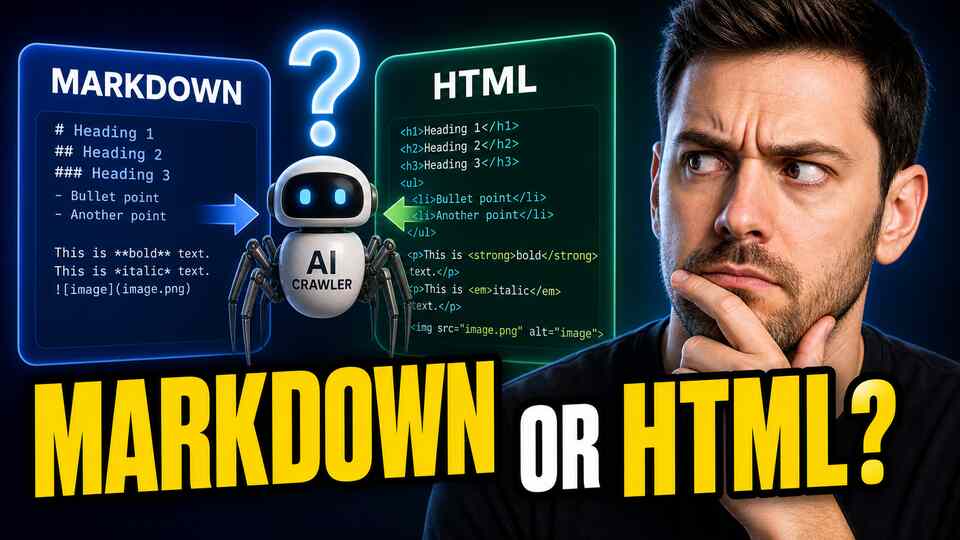
Markdown vs HTML: Which Format Do AI Crawlers Prefer?
Cloudflare recently announced that its infrastructure now automatically converts HTML pages to Markdown for AI agent requests, reducing token usage by up to 80% in the process. The announcement was la...
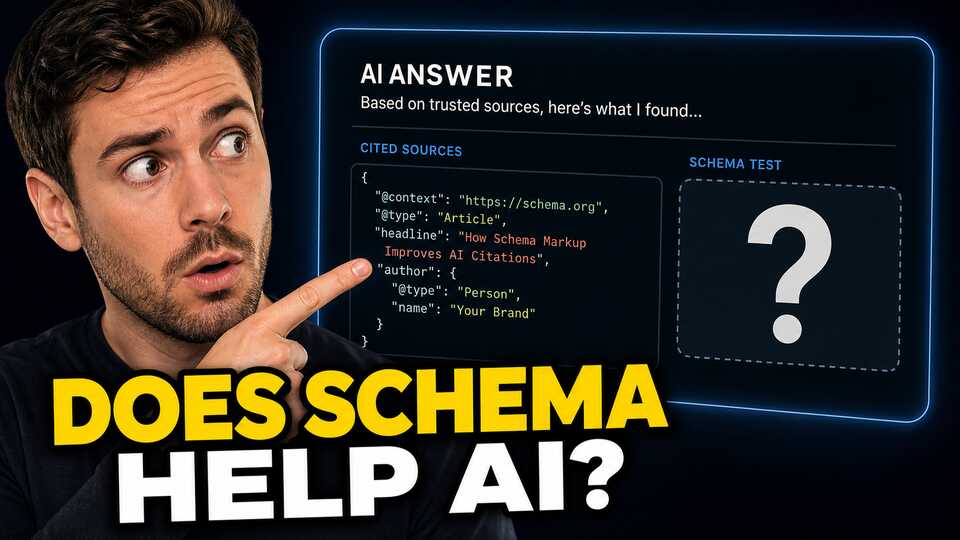
Schema Markup and AI Citations: What Our Tests Showed
Does adding structured data to your pages actually make AI engines more likely to cite them? It sounds like it should be obvious, schema markup exists to help machines understand content, and AI engin...
Entity Consistency: The Knowledge Graph Signals AI Trusts
Entity Consistency: The Knowledge Graph Signals AI Trusts
If you ask three different sources about your company, your homepage, your LinkedIn profile, and your Wikipedia entry, and they each give slightly different answers about what you do, who founded you,...
The Technical SEO Factors That Influence AI Citations Most
The Technical SEO Factors That Influence AI Citations Most
If you had to pick the technical SEO factors that matter most for AI citations, not for traditional search rankings, but specifically for whether AI engines pick your content as a source, which ones w...
Internal Linking for GEO: How to Pass Authority to Your Best Pages
Internal Linking for GEO: How to Pass Authority to Your Best Pages
Internal linking tends to get treated as either obvious (just link related pages, what's the big deal?) or arcane (let me explain PageRank flow and reasonable surfer models for an hour). The reality s...
Do Sitemaps Still Matter for AI Visibility?
Do Sitemaps Still Matter for AI Visibility?
Walk into an SEO meeting in 2018 and propose skipping the XML sitemap, and you'd have been politely escorted out of the room. Sitemaps were non-negotiable technical SEO infrastructure, the file every ...
Canonical Tags in the AI Search Era: What Still Applies
Canonical Tags in the AI Search Era: What Still Applies
Canonical tags are one of those unsexy pieces of SEO infrastructure that almost nobody thinks about until something breaks. A single line of HTML in the head of a page, telling search engines which UR...
Structured Data vs Unstructured Content: Which Wins in GEO?
Structured Data vs Unstructured Content: Which Wins in GEO?
One of the most-debated questions in GEO is also one of the most poorly framed: structured data vs unstructured content. Which wins? The framing implies you have to pick one. You don't. They're comple...
Chunking for LLMs: How to Format Content for AI Retrieval
Chunking for LLMs: How to Format Content for AI Retrieval
One of the most under-discussed concepts in GEO is also one of the most fundamental: chunking. It's the process of breaking content into the smaller units AI systems actually retrieve and reuse. Every...
How to Make Your Site Easier for AI Crawlers to Read
How to Make Your Site Easier for AI Crawlers to Read
Most teams obsess over what AI engines say about them and ignore the much simpler upstream question: can the AI engines actually read their site? The answer is often no, not because the content is bad...
How AI Crawlers Actually Access Your Website (And What They See)
How AI Crawlers Actually Access Your Website (And What They See)
Most website owners think of AI crawlers like they think of Googlebot, a single, well-known entity that periodically fetches their pages. The reality is messier. There isn't one AI crawler. There are ...
Should You Use llms.txt? An Honest Pros and Cons Analysis
Should You Use llms.txt? An Honest Pros and Cons Analysis
If you've spent any time in the GEO conversation in 2026, you've heard about llms.txt. It's the proposed file format for telling AI systems which content on your site is most authoritative. The pitch ...
What Is llms.txt? The New Standard for AI Crawlers Explained
What Is llms.txt? The New Standard for AI Crawlers Explained
Every few years, a new file format shows up that promises to fix something fundamental about how the web talks to machines. Most disappear within months. A few, robots.txt, sitemap.xml, ads.txt, quiet...
JSON-LD for AI Visibility: A Practical Implementation Guide
JSON-LD for AI Visibility: A Practical Implementation Guide
JSON-LD has quietly become the most important technical format in GEO. It's the way you tell AI engines, in machine-readable form, exactly what your content is about, what entities are on the page, ho...
Schema Markup for GEO: What to Add and Why It Matters
Schema Markup for GEO: What to Add and Why It Matters
Schema markup is one of the most over-promised and under-explained pieces of the GEO playbook. Some sources treat it as the magic switch that fixes AI visibility overnight. Others, based on real data,...