Content & Writing
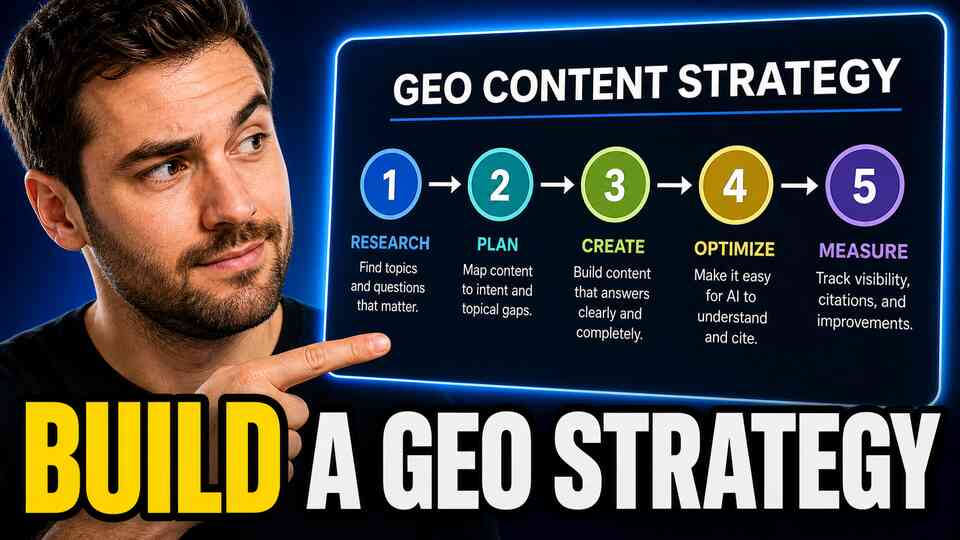
How to Build a GEO Content Strategy from Scratch
Most content strategies in 2026 are still optimized for a search engine that's slowly being replaced. They target keywords. They build for click-through. They measure success in rankings. And they're ...
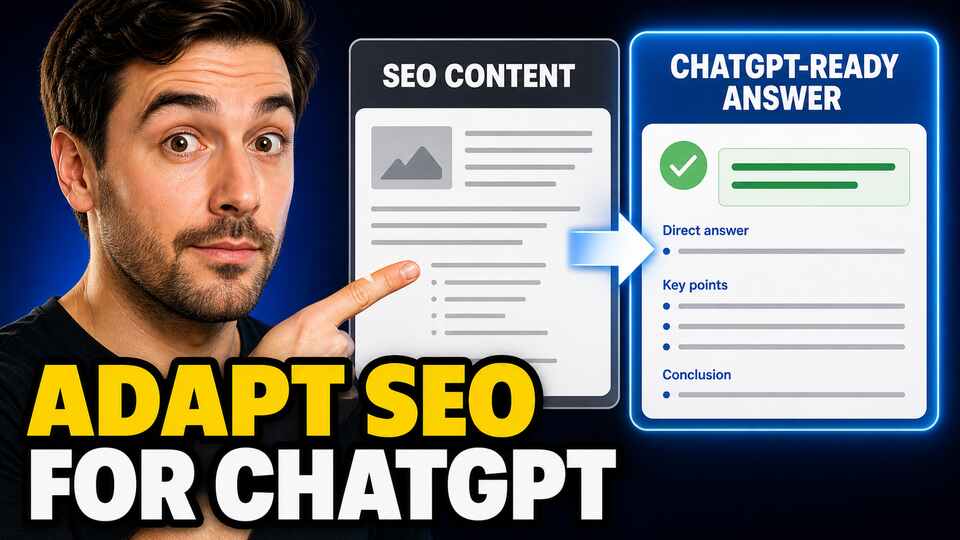
How to Adapt Your SEO Content for ChatGPT Search
Most marketing teams have spent years building libraries of SEO-optimized content, pages that rank well in Google, capture organic traffic, and convert. Now they're being told they also need to rank i...
How Better Content Structure Reduces AI Hallucinations About Your Brand
How Better Content Structure Reduces AI Hallucinations About Your Brand
One of the most uncomfortable realities of AI search is that the AI can confidently say things about your brand that aren't true. It can invent features. It can misquote prices. It can confuse you wit...
Why Content Freshness Matters More for AI Citations Than for SEO
Why Content Freshness Matters More for AI Citations Than for SEO
One of the quietest but most consequential differences between traditional SEO and AI search is how the two systems treat content age. Google has always weighted freshness for some queries (news, spor...
Internal Linking for GEO: How to Pass Authority to Your Best Pages
Internal Linking for GEO: How to Pass Authority to Your Best Pages
Internal linking tends to get treated as either obvious (just link related pages, what's the big deal?) or arcane (let me explain PageRank flow and reasonable surfer models for an hour). The reality s...
Information Gain: The Hidden Ranking Factor for AI Search
Information Gain: The Hidden Ranking Factor for AI Search
The metric Google patented but barely talks about In June 2022, Google was granted patent US20200349181A1, a system for measuring how unique a piece of content is compared to everything else available...
Chunking for LLMs: How to Format Content for AI Retrieval
Chunking for LLMs: How to Format Content for AI Retrieval
One of the most under-discussed concepts in GEO is also one of the most fundamental: chunking. It's the process of breaking content into the smaller units AI systems actually retrieve and reuse. Every...
AI SEO for Content Creators
AI SEO for Content Creators
Content creators already sit on the raw material that AI models love. Long-form YouTube videos, detailed blog posts, newsletters with original takes, podcast episodes full of specific examples. The ca...
How to Build "Best of" Pages That AI Engines Actually Use
How to Build "Best of" Pages That AI Engines Actually Use
"Best of" pages are the workhorses of commercial AI search. When a user asks ChatGPT, Perplexity, or Gemini "what's the best CRM?" or "which AI visibility tool should I use?", the engine doesn't go sc...
Why Plain-Language Writing Wins in AI Search
Why Plain-Language Writing Wins in AI Search
One of the most counterintuitive things about writing for AI search is that the kind of prose that wins isn't sophisticated, lyrical, or rhetorically clever. It's plain. Sometimes startlingly plain. S...
Write Content AI Can Summarize Cleanly (And Why It Matters)
Write Content AI Can Summarize Cleanly (And Why It Matters)
One of the quietest skills in modern content writing is also one of the most valuable: writing in a way that AI engines can summarize cleanly. Not "writes well." Not "ranks for keywords." Specifically...
Turn Your Help Docs into GEO Assets in 5 Steps
Turn Your Help Docs into GEO Assets in 5 Steps
Most companies treat their help center as customer support infrastructure, a cost center that exists to deflect tickets, not as marketing. But when you look at where AI engines actually pull answers f...
Brand Pages That AI Trusts: The Anatomy of an Authoritative Page
Brand Pages That AI Trusts: The Anatomy of an Authoritative Page
Every company has a "brand page", the canonical landing page that explains what they are. For most companies it's the homepage. For others it's an /about page. For multi-product companies it's often a...
How to Optimize Category Pages for AI-Generated Answers
How to Optimize Category Pages for AI-Generated Answers
Category pages sit in a strange spot in the GEO playbook. They're not product pages, no single SKU to anchor around. They're not blog posts, no clear narrative. They're not glossary entries, not defin...
Product Pages That AI Loves: 9 Patterns That Work
Product Pages That AI Loves: 9 Patterns That Work
Product pages are the workhorses of any commerce site, and they live in an awkward middle ground in AI search. They get cited, but not as often as listicles. They drive conversions, but not as often a...
Topic Clusters for GEO: How to Build Them and Why They Work
Topic Clusters for GEO: How to Build Them and Why They Work
One of the cleanest predictors of which sites get cited in AI answers isn't the quality of any single page. It's whether the site looks like an authority on the entire topic, or just a one-off contrib...