ChatGPT Shopping: How to Get Your Product Recommended by AI Shopping Assistants
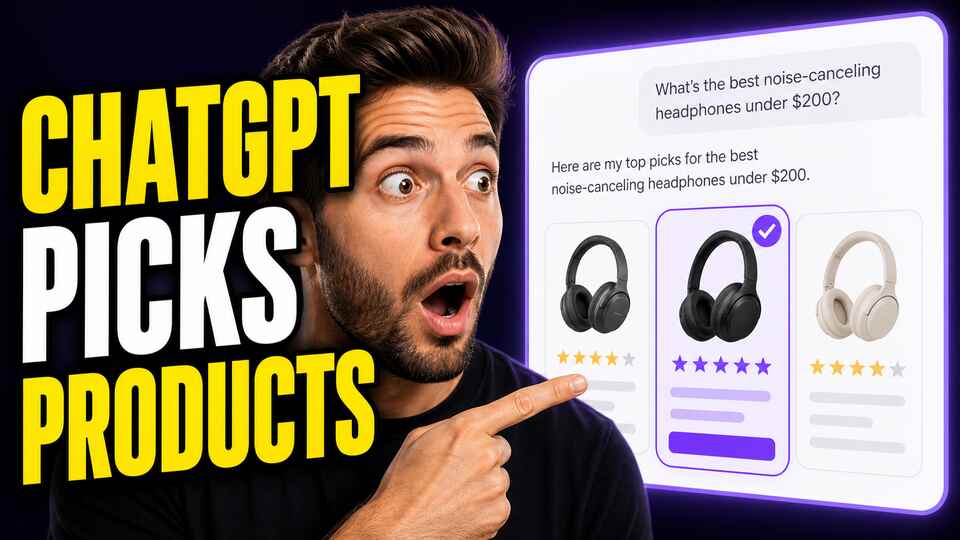
In early 2025, OpenAI launched ChatGPT Shopping, and quietly handed ecommerce brands a problem they haven't solved yet. When a user asks ChatGPT "what's the best standing desk under $600?" or "recommend a protein powder for endurance athletes," ChatGPT now returns a curated product recommendation list, complete with images, prices, and buy links. The products that appear in those lists aren't chosen by an OpenAI editorial team. They're pulled primarily from Google Shopping feeds. Which means your Google Shopping optimization is now directly connected to whether you appear in ChatGPT's product recommendations, and most ecommerce brands have no idea this link exists.
This article explains exactly how ChatGPT Shopping works, what signals determine which products get recommended, what feed specifications matter, how this differs from Amazon optimization, and what a practical ecommerce team should do about it today.
How ChatGPT Shopping Works
ChatGPT Shopping isn't a standalone product catalog maintained by OpenAI. When a user submits a shopping-intent query, ChatGPT queries external data sources, primarily Google Shopping, synthesizes the results, and presents a curated recommendation list. The AI doesn't just return raw search results; it selects a subset of products, organizes them, and frames them with natural language commentary ("great for heavy sleepers," "ideal for apartment gyms").
According to OpenAI's shopping research announcement, the feature is designed to help users handle complex purchasing decisions where they'd previously need to visit multiple review sites and retailer pages. OpenAI has also published a separate piece on powering product discovery in ChatGPT, which confirms that the system is built to surface products that match user intent with high confidence, meaning the AI applies its own judgment about fit, not just keyword matching.
The implication for brands is significant: your product doesn't just need to be in Google Shopping. It needs to be optimized well enough that when ChatGPT evaluates competing products for a given query, yours ranks highly enough to make the curated shortlist. The bar is higher than "eligible to appear." You need to be good enough to be recommended.
Research from Semrush confirming that ChatGPT searches Google Shopping has validated this architecture and its practical implications for SEO and ecommerce teams.
What Signals Drive Product Recommendations
If ChatGPT Shopping pulls from Google Shopping, then the factors that drive Google Shopping ranking are now also factors in AI shopping recommendations. But they're not weighted identically. Based on how ChatGPT synthesizes and filters product results, several signals appear to carry particular weight:
Product title optimization. ChatGPT interprets user intent linguistically and matches it against product titles. A title like "Standing Desk, Electric Height Adjustable, 48x24, Black" is more likely to match a query like "electric standing desk for small spaces" than a title like "ErgoDesk Pro X7." Include the primary use case, key specifications, and category terms in your title, not just brand model names that mean nothing to an AI evaluating fit.
Review count and rating. AI models treat social proof as a strong quality signal. Products with high review counts and ratings above 4.0 stars are significantly more likely to appear in AI recommendations than products with sparse or mixed reviews. This isn't about gaming the system, it reflects how AI models assess product trustworthiness in the absence of direct product testing.
Price competitiveness. ChatGPT is generating recommendations for users who often specify a budget. Products priced significantly above market rate for equivalent specifications are filtered out, or explicitly flagged as "premium options" rather than recommended as primary choices. Monitor your price positioning relative to competitors for key product lines.
In-stock status. Out-of-stock products don't appear in AI shopping recommendations. This sounds obvious, but many brands run Google Shopping feeds with inconsistent inventory data. A product that's actually in stock but shows as unavailable in the feed will be invisible to ChatGPT Shopping regardless of how well it's optimized on every other dimension.
Rich product data. Detailed product attributes, dimensions, weight, materials, compatibility, certifications, give ChatGPT the information it needs to confidently match your product to specific user requirements. A user asking for "a standing desk with a weight capacity over 50kg" can only be matched to your product if that specification is explicitly present in your feed data.
Product images. ChatGPT Shopping displays product images alongside recommendations. High-quality, clear primary images improve click-through from the recommendation list. Multiple angle shots, lifestyle images, and specification callouts may also contribute to how confidently the AI can characterize the product for different use cases.
The OpenAI Agentic Commerce Feed Specification
Beyond Google Shopping optimization, OpenAI has published an official Agentic Commerce feed specification for brands that want to integrate directly with AI shopping agents, not just rely on Google Shopping as an intermediary. This spec is designed for a future where AI agents autonomously complete purchases on behalf of users, and brands that adopt it early will have a structural advantage as agentic commerce matures.
The Agentic Commerce spec goes beyond standard product feed fields. It emphasizes:
- Structured use-case data: Not just what your product is, but what problems it solves, for whom, under what conditions. This maps directly to how AI agents evaluate product-query fit.
- Freshness signals: Inventory levels, pricing, and promotional data that update in near real-time, enabling AI agents to make accurate recommendations without surfacing stale information.
- Trust and provenance signals: Manufacturer information, certification data, and authenticity indicators that help AI agents distinguish genuine products from counterfeits.
- Return and shipping data: Policy details that AI agents can surface when users ask about purchase risk, a key factor in high-consideration buying decisions.
For most ecommerce brands, Google Shopping feed optimization is the immediate priority. The Agentic Commerce spec is the medium-term roadmap. Brands in high-consideration categories (furniture, electronics, health products) should review the OpenAI spec now and build a migration plan. This connects directly to the broader landscape of agentic search optimization, a shift that will accelerate significantly in 2026 and beyond.
How This Differs From Amazon Shopping Optimization
Amazon has its own AI shopping features, and many ecommerce brands reflexively apply the same optimization logic to ChatGPT Shopping. This is a mistake, because the underlying architecture is fundamentally different.
Amazon's AI recommendations draw from Amazon's own catalog, its own review system, and its own behavioral data (purchase history, wish lists, browse patterns). The optimization levers for Amazon, A+ Content, Amazon Vine reviews, keyword-stuffed backend attributes, Prime eligibility, are Amazon-specific signals that have no relevance to ChatGPT Shopping.
ChatGPT Shopping draws from Google Shopping. That means the optimization levers are Google Shopping levers: feed quality, Google Merchant Center account health, Google product reviews, Google's structured data standards, and Google's shopping ads performance signals. An ecommerce brand that has invested heavily in Amazon SEO but neglected Google Shopping is significantly underrepresented in ChatGPT's product recommendations, even if they have strong products and excellent reviews on Amazon.
This has another implication: brands that sell exclusively on Amazon (no direct-to-consumer channel, no Google Shopping feed) are currently invisible to ChatGPT Shopping. If DTC isn't commercially viable for your product, you should at minimum establish a Google Shopping presence through your brand website, even if Amazon drives the majority of your transaction volume. GEO for ecommerce covers the broader strategic context for this shift.
Perplexity Shopping: How It Differs
Perplexity has also built shopping features into its AI search product, and they work differently from ChatGPT's approach. Perplexity's product recommendations draw from a combination of sources: web search results, product review sites, and in some cases direct retailer feeds. Perplexity places more weight on editorial authority, recommendations from Wirecutter, RTINGS, Consumer Reports, and category-specific review publications carry significant influence in Perplexity's shopping outputs.
This means the optimization strategy for Perplexity shopping visibility is different from Google Shopping optimization. For Perplexity, the priority is getting your products reviewed by authoritative third-party editorial sources. A Wirecutter "best pick" designation or a top rating on RTINGS will drive more Perplexity shopping visibility than feed optimization alone.
The practical recommendation: treat these as separate but complementary tracks. Optimize your Google Shopping feed for ChatGPT visibility. Build editorial relationships and pursue third-party reviews for Perplexity visibility. Both contribute to getting your product recommended by AI shopping assistants across the ecosystem, just through different mechanisms.
Practical Checklist for Ecommerce Brands
Here's a prioritized action checklist for ecommerce brands looking to improve their ChatGPT Shopping visibility:
- Audit your Google Merchant Center account health. Disapproved products, feed errors, and policy violations make your products invisible to Google Shopping, and by extension, to ChatGPT. Fix all errors before any other optimization work.
- Optimize product titles for intent, not brand terms. Rewrite titles to include primary use case, key specifications, and category terms that match real user queries. Test title variants against the queries you most want to rank for.
- Complete all product attributes in your feed. Every product category has required and recommended attributes in Google's product data spec. Complete all recommended attributes, not just required ones. Specificity wins.
- Build a review generation system. Set up automated post-purchase review request emails. Aim for a sustainable cadence of fresh reviews. Address negative reviews promptly with a response that shows product improvements.
- Monitor price competitiveness on priority SKUs. Use Google Shopping Intelligence or a competitor pricing tool to ensure your key products aren't systematically priced above market without a justifiable reason.
- Ensure real-time inventory sync. Your feed should reflect accurate in-stock status with minimal lag. Out-of-stock products that appear in-stock in the feed damage account health over time; in-stock products that appear out-of-stock are invisible to AI recommendations.
- Upload high-quality product images for every SKU. Multiple images, clean backgrounds, and clear product detail shots meet Google's image quality standards and improve AI presentation quality.
- Review the OpenAI Agentic Commerce spec and begin planning a roadmap for direct integration, particularly if you operate in a high-consideration category.
- Track your AI shopping visibility. Run representative shopping queries on ChatGPT monthly and record which of your products appear, how often, and with what framing. This is your baseline for measuring improvement.
What This Means for Ecommerce Strategy
The emergence of AI shopping assistants isn't a marginal channel. It's a fundamental shift in how purchase decisions are made. A user who asks ChatGPT for a product recommendation and receives a curated, AI-endorsed list is in a very different psychological state than a user who runs a Google search and evaluates ten blue links. The AI recommendation carries implicit authority. Users are more likely to buy from a shorter list with AI commentary than to wade through an undifferentiated search result page.
Brands that appear consistently in AI shopping recommendations will enjoy a compounding advantage: higher visibility leads to more clicks leads to more purchases leads to more reviews leads to higher visibility. The reverse is also true. Brands that are systematically absent from AI shopping recommendations are losing consideration at the earliest stage of the purchase funnel, often without knowing it.
The good news is that the optimization levers are well-understood and actionable today. Google Shopping feed quality is not a new concept, the twist is that the audience for well-optimized Google Shopping data now includes AI systems that synthesize and recommend, not just Google's own search algorithm. That audience is growing rapidly. For ongoing tracking of your AI shopping visibility across ChatGPT, Gemini, and Grok, BabyPenguin provides the monitoring infrastructure to measure your brand's presence in AI-generated product recommendations and catch shifts before they compound.